Career Bloom

Your source for authentic and practical career advice

  • Dear Software Engineer – Do you care about your career?

    Here are some of the realities of India’s graduating students:

    1. India graduates 1.5 million engineers, less than 17% of these are employable in any IT firm, a much less percent are equipped to work in startups and product companies.
    2. Number of software engineering job, or IT professional job, is way less than this number.
    3. A graduating class of CS/IT from a typical tier2/3 college has almost equal number of male and female students. However, the entry-level engineers in a large number of companies are male-dominant.

    These are not new information, Aspiring Minds’ survey data above came out around 2012 and these statistics haven’t change much since then.

    My point is: you have beaten lots of odds to get this opportunity to work in a software company, and you have been found capable to do so. Why are you not doing the best you can to make the most of this opportunity? Because my experience suggests you are not. You are being lazy, or naïve, or both.

    I have been interviewing software engineers (0-6 yrs. experience) for quite some time. Over last 6 months, the pace of these interviews have picked up considerably and so some impressions from the interviews have stayed with me for much longer than I would like. This post is to share some of these impressions, and offer some advice to people who may find themselves in similar state (as described below).

    Tell-tale signs

    Here are some of the signs that you may be lazy, or naïve, or both, as far your handling your own learning and growth are concerned.

    1. You have been working in a pattern of work which asks you to do the same thing again and again – project over project, release over release, year over year. It is the same kind of UI elements to be added on different pages, adding simple CRUD operations for different objects, coding a screen which is almost same as this other page you did last time.
    2. You hardly engage in discussion about problem-solving and design, either in the interview or on the job. Data structures, algorithms, design patterns, object-oriented thinking, etc. sound like alien academic stuff not relevant for your job. You talk of a lot of technology buzzwords, but don’t know the concept behind most of them and have no idea if you are asked to do them from first principles.
    3. You are not very articulate in interviews or at work – you either talk a lot without substance, or talk very less, or talk unrelated stuff. You can’t clearly explain your own accomplishment in a way that an interviewer or someone outside your work can understand, many times you can’t clearly explain (or don’t know) what business problem or goal is being served by your work.
    4. You have not worked on non-functional part of the code – it is hard for you to visualize scale, performance, operability, quality, security and other non-functional concerns about software since you haven’t been exposed to it

    You may also realize that while your company and job probably didn’t require you to do any of these, but you too didn’t spend your own time to work on these.

    Why is this a problem?

    I have spent quite some time reflecting on these and why my interviews have gone on similar lines with so many people. And I know I have seen an extremely small subset, there are a lot of people out there in similar state in their software engineer career journey.

    In my mind, all of this boils down to one fact: these individuals haven’t paid attention to the reality that they are not learning or growing in their job. And this is a big problem, because there is no career to be made if there is not enough learning and growing in initial foundational years.

    As I had written a long time ago in one of the posts ( Workplace Reality #1: Organizations care for value, not you), organization most of the time will not care about whether employees are learning and growing on the job or not. It must be the responsibility of the employees themselves to care about it.

    If you are not working on a more complex problem today than what you were doing yesterday, you are fooling yourself into thinking you have mastered your skills and hence the work is easy now.

    If you are not paying attention to how many bugs are being discovered in your code and getting better accordingly, you are becoming less valuable to the company.

    If you are not increasing your ownership from code to design to problem-solving, from tickets to features to modules to projects, from development to engineering to customer to business, your impact to the organization is reducing on a relative scale since a more junior engineer may be doing the same as you at lesser cost to the organization.

    Of course, it may be the environment as well that makes this happen – IT companies operate in similar ways and you may feel trapped into them. But it doesn’t matter – since you are the one who sufferes because of this, you still have to do something about it.

    So if you are not aware of this, or are aware but not doing anything, rest assured organization is not thinking either.

    This is a big problem, for you. You need to do something, starting now.

    So what can you do?

    Good question!

    Here are a few things you can do:

    1. Evaluate your work pattern and see how much of it matches the signs above. If they do, try to understand why is that the case. Sometimes it is because you haven’t try to ask for a different kind of work. Most other times, it is because company has gotten comfortable with you doing it this way, and you haven’t demonstrated that you actually have other skills that make you more valuable.
    2. Reflect on the skills you have that you are not using. If you keep working on front-end, see if you have API development skills, or SQL skills as well, for example. If you work on mobile apps, maybe you also have skills in web front-ends. There is a good chance that you have lost some of those skills, in which case you should brush them up by picking up a side project, enrolling in an online course, etc. If you do find a skill you still have, do talk to your manager in your next 1-1 to see if you can make more use of it going forward.
    3. Evaluate your problem-solving and design skills – there are lots of design problems out there, google them, try them out and see if you are good at those. Read up about strategies for problem-solving, design patterns, data structures and algorithms etc. and see how they apply to your work. It is very unlikely that you don’t find their application, it is just that you haven’t thought of your work in that way.
    4. Find a mentor, within the company or outside, who can help you as you evaluate yourself and have questions about it or need guidance. It is easier to get a mentor than you think – there are many people who will be willing to help if you can demonstrate you are serious about using their time judiciously.
    5. Evaluate your written and verbal communication skills. Enroll in courses if you need to – most software engineers do not focus on this but communication skills are key to being effective at workplace and beyond. And these are easier to acquire than some of the technical skills you may have already learned. So make an attempt to keep getting better at them.

    All of this starts from the acceptance that there is a problem that needs to be fixed urgently.

    Acceptance is the absolute first step. If you take that, other steps are way easier and totally within your reach.


    Are you ready?

  • Building a career like a word game!

    I will be surprised if you have heard of the word game called Bananagrams (video: how to play it). And I will be very surprised if you have not heard of Scrabble (video: how you play it) Google turns up 82M results on scrabble while less than 1M with Bananagrams. Of course, in my home, it is different: everyone loves playing Bananagrams, ever since we discovered the game a few years ago. Its simplicity and flexibility attract everyone we have introduced to it.

    The Games people play

    Here is a brief description of these two games.

    Scrabble

    Each player puts a letter tile on the scrabble board, constructing a new valid word and extending the previous configuration of letters on the board (you can’t put a tile randomly somewhere). Each letter has some points and you get scored on the basis of total points generated by the words (and sub-words) constructed new in your turn. The game ends when letters are exhausted, or more likely in my case, you can’t put a letter on the board satisfying the constraints. The winner is the one who ends up with the most points. Usually, it takes about an hour (or more) for 4 players to get close to finishing the game.

    Bananagrams

    Each player gets a few starting tiles (equal numbers), and they need to arrange them into a valid connected word set (like a crossword). Key difference from Scrabble is that each player constructs their structure of words and doesn’t interact with others’ constructions. Players keep taking new tiles from the bag, one at a time, and reconfigure/augment their structure to remain valid with the addition of a new letter. The game ends when someone successfully finishes their construction and there are no more tiles to be picked from the bag.

    Career = Word Game?

    So now you are wondering – what has all this to do with a career?

    Here is the idea: A career proceeds in a way that is similar to a word game. You are handed an initial set of letters (think skills and opportunities). You use these letters to construct words (results), you get more letters and can construct ‘better’ words (‘better’ results), depending on existing board configuration (career stage), earning points (milestones) and getting closer to a win (career success).

    It becomes more interesting as you take this analogy forward. As your career progresses, you get more opportunities to produce outstanding results and get great rewards, as long as you are building on your skills and opportunities and playing to your strengths. You look to get the most results with the least resources spent.

    However, the fascinating thing about this analogy, and the key insight of this post, is that the differences between these two games (Scrabble and Bananagrams) are also analogous to different ways people manage their career:

    1. In Scrabble, your words and moves depend a lot on the words and moves your opponents make since everyone is on the same board (playing field) and trying to occupy same spaces. In Bananagrams, your outcomes and moves solely depend on the tile and time that you have, since you are playing on your own surface (playing field). This has very significant implications to how you see your career progressing and what strategies you can apply – do you feel constrained by the career progression of others, or can you focus on your own definition of milestones and success and keep progressing towards your career goals.
    2. In Scrabble, word configurations are sacrosanct and no letters can be moved after they have been placed on the board by players. So it becomes harder and harder to make new words because it needs to fit the existing configuration. In Bananagrams, you have the liberty to break your configuration (partly or fully) and modify your configurations as you see fit, every new letter is an opportunity to reimagine what could be an ideal configuration. This makes the game play easier in Bananagrams, and you feel much more in control compared to Scrabble. Career can be thought in the same way: do you feel beholden to whatever career you have built so far, or are you willing to destroy and rebuild parts of it when an opportunity or a new skill can benefit from such a rebuild.
    3. In Scrabble, relative abilities of various players matter. If an expert is playing with a novice (whose vocabulary is not so great), the novice loses very badly because they have to play at the level of the expert which they find hard to do. In Bananagrams, since every player makes their own words, the relative abilities don’t have much impact, what matters is how fast they can use the letters and complete their configuration. This plays out in a career as well – do you leverage all your strengths cleverly and achieve your goals, or you try to emulate what others are doing and get stuck because you can’t pull off what others can.

    Key Career Questions

    These give rise to 3 important questions you need to answer – answers to these questions impact the career outcomes significantly.

    Are you willing to choose your own playing field and not compare with others on a common playing field?

    Do you play on a field where you are every day competing with someone else, and your success/failure depends on how others are doing? Or are you choosing your own playing field where you can build your own career in your own way?

    Are you willing to move back in order to move forward in your career?

    Do you want to keep building on what you have achieved in your career and keep trying to move forward and up? Or are you willing to revisit what you have achieved, and are willing to destroy and rebuild to make it easier to move forward and up?

    Are you willing to leverage your own strengths and not get distracted by what others have?

    Do you believe in playing to your strengths and seek opportunities that align with it? Or do you want to do what others are doing (or is the ‘in-thing’) and try to succeed there?

    Career Principles to live by

    I am a Bananagrams person as far as career management is concerned and hence my advice to myself and to others always are the following:

    1. Choose your own playing field. Have a strong belief that you are on a playing field where you are the only player – you compete against yourself, and you live up to your own measures of success always trying to improve on your last results.
    2. Be ready to review and rebuild. This is a key strategy for a good career. World will change around you, without notice sometimes – as I am writing this, Corona is impacting globally how we work and how we teach/learn, among other things. You need to be willing to review what you have built as part of your career and be ready to demolish and rebuild parts of it. So for example, you may be a good developer, and you may have a great career being a good product manager. To achieve that greatness, you may have to demolish parts of your engineering expertise (deep programming and development skills) and maybe go back a little on your external measures of growth (title, salary, bonus), but this can set you up for a great growth phase and you ultimately succeed better.
    3. Pride your strengths, don’t envy others’. Career is a game you need to play for 40 years (if not more). You can’t hope to succeed in the long run if you are not playing to your strengths and instead trying to do what others think are good skills to have. So don’t try to become data engineering just because ‘big data’ is in vogue, don’t take a job in a company just because they work on the next coolest tech, do these only when they align to your natural strengths and you feel you will do well. Identify right role, right job, right company that aligns with your strengths so that you get to leverage your strengths to succeed.

    I strongly recommend you play both of these games if you haven’t done so already, and keep this analogy in mind. You will find interesting set of new analogies that will apply to your career strategy as well. Choose your strategy well, and keep playing!

    Go Bananagrams!

  • How do I build a good product management career?

    This is some general advice I give to budding product managers early in their career. This is also applicable to those who are in adjacent roles like program management, product marketing, product planning, technical project management, etc. who wish to get into product management.

    Of course, everything is contextual and so is this advice! If you share more information about you as person and professional, you can get advice that will work better for you.

    With this caveat, let me begin.

    The number of skills a product manager needs to be good at is fairly large. In fact, bring me a skill and most of the time I can show you that a product manager needs it. However, I think there are a few key skills that make a good product manager a great one, and it is important to work on them early on in your career because they take time to perfect (if you ever become perfect in them).

    If I have to pick 3 (different people will pick different top 3 I am sure), they will be:

    1. Dealing with ambiguity – Taking a vaguely defined problem (“increase product reach by 300% in 4 quarters”) and working on it to deliver results.
    2. Active communication – Ability to listen well via verbal and non-verbal (to the customer and to stakeholder), assimilate what is being said or implied (customers don’t know what they want), and articulate at the right time to the right audience in the right way (what works for a developer doesn’t work for an exec or a customer).
    3. Persuasion and Negotiation – Ability to navigate bias, ignorance, politics, self-interest, and rationality to achieve agreement on solutions you care most about

    Once you believe that these 3 (or some other 3 you have prioritized) are the right areas to focus on at a certain stage of your career, you need to constantly evaluate whether your role and tasks give you the opportunities to hone your skills in these areas. The way to evaluate this is to set goals for building competencies in each of the identified areas, and periodically checking if you are meeting your goals. At some point, you may find that they do not.

    When you discover this mismatch, you need to change your your role and/or responsibilities (or tasks) by working with your manager. If you have been using your 1-1s with your manager effectively, your manager will understand your career aspiration and will work with you to do the tweaks necessary to bring your goals and organization goals in alignment.

    This is an ongoing cycle – you identify goals, set measures of success, identify mismatch, update your goals, and do it all over again. Over time, goals will become tougher, measures will become harder to achieve, but you will become much better at lots of these key skills!

    You also need a mentor who can advise you on your journey. Preferably, this is someone who is in your company and has been in a similar role before (or is now). If it is someone not in your company, make sure they know you well enough and that they have time to understand your context when you talk to them for advise.

    When you start in a PM career, it is important to demonstrate good product management domain skills (ability to take a product and deliver it to the market and achieve business results). As you grow in your career, your ability to work with others (leadership and relationships) and ability to navigate the organization (persuasion and conflict management) become more important.

    Another thing to keep in mind is this: growth in product management typically doesn’t come via team size. It comes through the span of influence on the product. So ensure that you are growing in one or more of these dimensions. If not, it is time to intervene.

    Here are some ways this influence shows up:

    1. How many products or features you are responsible for?
    2. How much of business metrics of the entire company you are managing (For ex, ‘20% of product revenue is through products I manage’)
    3. How early in the product cycle (conceptualization, market research, specification, design, development, launch, refinement, etc..) you get involved and/or own?

    In all of this, being self aware is critical. The more you understand yourself, the better you can evaluate yourself and your career better, and better you can find the niche where your strengths and passion play a major role and make you a world-class product manager.

  • Difficult conversations are difficult!

    Over last several months, I had several conversations with the mentees assigned to me by LinkedIn mentor program, as well as with engineers in my company. Interestingly, in most of the cases, I had same recommendation for them – have that conversation that you feel is too tough to handle.

    Now, it is possible that it is a case of ‘if I have a hammer, everything looks like a nail’. It is also possible that given this was perf review season, people had similar issues. Either way, here I am, talking about difficult conversations!

    What is a difficult conversation? Any conversation that you think you need to have, but you feel it will be tough for you emotionally and you don’t know how to have this conversation. In most such cases, one or more of the following are true as well, and their presence makes it a difficult conversation:

    1. It involves one or more incidents which has affected you emotionally
    2. It requires you to be critical to the other person
    3. It is very important for you to address this issue, but keeping a good relationship with the person is equally important for you

    As you can see, ‘difficult’ is written all over it!


    Here are a few situations which create the need for having a ‘difficult’ conversation:

    1. You feel your manager is biased against you and you need to confront your manager
    2. One of your peers criticized you in public and you are super angry/embarrassed.
    3. You don’t agree at all with the feedback given to you during your performance review and want to rebut them by meeting your manager again.

    It is important to understand why people find it difficult to have such conversations:

    1. They don’t know how to broach the topic.
    2. They don’t know how the other person will react
    3. They don’t know how they will deal with other person’s reactions
    4. They don’t know how to control their own emotions.

    This problem also exists because most people don’t have the skill and experience to have such a conversation. So they avoid it. The result is they lose an opportunity to get such an experience and learn the skill. It becomes a vicious cycle that they find to get out of.

    My advice in all such situations is simple: be courageous and set up the meeting to have that conversation. Then prepare for it hard. When the meeting starts, wade into the difficult topic honestly and demonstrate candor at all times. Learn from the experience and do better next time when another such situation comes up.

    If the resolution of the issue is important to you, you will find courage to have that conversation. This is something no amount of advice can help you do, you have to do it yourself.

    Once you have decided to have that difficult conversation, you should prepare well because it is an important conversation – irrespective of the outcome.

    A pre-requisite to having such a conversation is to be able to give feedback effectively and to receive feedback effectively. Giving and receiving feedback are key skills to learn and they are eminently learnable and you improve as you practice it more.

    To prepare for such a difficult conversation, you should focus on 3 aspects:

    1. Opening the conversation
    2. Handling the response
    3. Managing your emotions

    Opening Statement

    This is completely in your control, so write out your opening statements and pick right words and phrases to use, picking specific examples. Focus on phrasing your statements around your feeling, and avoid judging other person’s actions.

    Consider these 2 statements for a situation like #2 above (your peer criticized you in public):

    Statement 1 – “When you said in team meeting I don’t know anything about blockchain, I felt embarrassed. I felt belittled and small. I have been disturbed since and I can’t do my work well.”

    Statement 2 – “You belittled me in front of everyone and embarrassed me. You have done it so many times, why would you do it?”

    Statement 1 is all about you and your feeling, and it is hard for anyone to say you are wrong, because it is your feeling and no one else knows more about it than you. Statement 2 is all about the other person who can always jump in and try to justify and show that your judgement is wrong; you immediately start on a wrong footing. So try to craft your opening statement that resembles Statement 1 rather than Statement 2.

    Handling the response

    If you think about why you were afraid of having this conversation, you should be able to anticipate the response well! There could be different types of responses depending on your opening statement, but I will assume you will prepare your opening statement well and not create additional problems!

    You should try and anticipate the emotion as well as content. For example, taking Statement 1 above as your opening statement, there are multiple responses possible (since you know this person, you will be able to figure out which subset applies to you):

    1. The person apologizes and tries to assure you that was not the intention.
    2. The person gets angry at you and accuses you of being too soft, not able to take feedback, etc.
    3. The person gets emotional
    4. The person is shocked
    5. The person tries to explain what actually happened in that situation

    Of course, this is not exhaustive list of responses, but general idea is that there are 2 kinds of responses: either the person displays a positive emotion/intent (apology, emotional, shocked), or a negative emotion/intent (anger, rebuttal). If it is the latter, most likely you didn’t paint a sufficiently grim picture of your feeling, your emotional state. Do better next time, seriously!

    If you feel you are unable to handle this negative response, be willing to stop the conversation and pick it up at a later time – there is no point in continuing and aggravating the situation if you can’t control it.

    If you have a positive emotion/intent displayed, you have handled the conversation well. You now need to engage in a constructive conversation that will strengthen your relationship with the person and also resolve the issue. Remember that such issues are mostly solved at emotional and relationship level, very rarely at a logical/cognitive level.

    Managing your emotions

    If you are not careful, your emotions can distract you from your goal in this conversation. It is not a problem if you demonstrate emotion, it is a good thing in fact, because you do need to emphasize that the issue is caused at emotional level. The problem occurs when you are not in control of them. For example, let’s say the response from the person shows negative emotions. If you are not careful, you can reciprocate and the matter will get worsened. You need to be aware of your emotions and be willing to stop the conversation if you think you can’t control your own emotions.

    It is hard to have a difficult conversation. However, good news is that whatever you learn when engaging in such a conversation is very transferable to another similar situation, so this is a lifelong learning that you engage in.

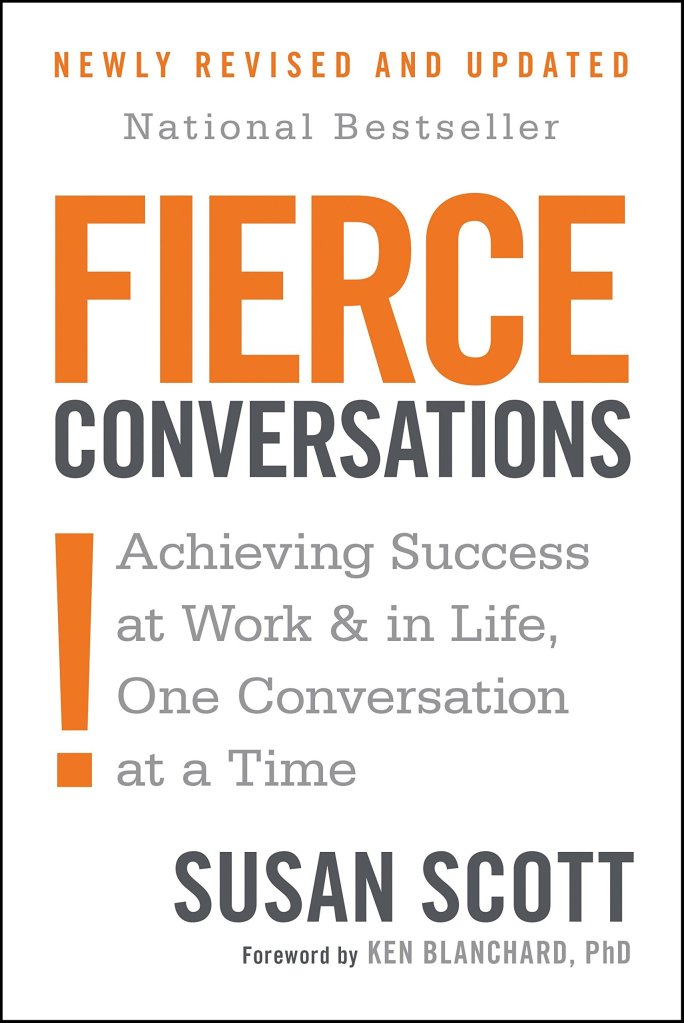
    There are many good books that I have found useful in learning how to handle such conversations, the two I have found extremely useful are Crucial Conversations and Fierce Conversations.

  • What do you focus on – activities or results?


    Many of you would have had your performance review 1-1 recently, and most likely you are disappointed about how it went. There are many reasons why you would be disappointed right now, I talked about it in my post last year about this – Performance Review – The Day After.

    If you want to understand why this disappointment happens (and maybe every year) and what you can do about it, read on. (more…)

  • This is the final post in the series I started a few years back when I left US and landed in India (see first partsecond part and third part). It has been an inordinately long time since I wrote last in this series, and it must be attributed to my lack of perspective on things that were unfolding in my journey. It took me time to make sense of some things!

    In my last post 20 months back, I had outlined a few options around rejigging my portfolio and I had to choose one or more:

    1. Continue to stay 1-person army and try to become high-end (thereby increasing my per-hour revenue)
    2. Hire and grow Palash into a consulting practice
    3. Rejig my portfolio by moving from people-intensive offering to technology-intensive offering

    It turns out that I had not accounted for vagaries of my mind! I ended up making a choice that was not on the list by any stretch of imagination.  (more…)

  • This post is part of the series on 9 Realities of Modern Workplace.

    In this post, we talk about Reality #9: “What leaders say can be very different than what they mean“. This reality should be interpreted as the gap between speech and intent, or speech and action (because intent is what is acted upon).

    Why speech-action gap

    There are 3 primary reasons this happens.

    Justifying hard-to-justify acts

    Leaders, like everyone else, need to justify their acts, esp. if they do things that seem odd or unfair to an employee or a group. For example, when a critical employee wants to leave, a leader may offer him/her disproportionately (and unfairly) high salary to keep and meet the organization goals, at least for the short-term. When being asked about this situation, they may say things which will cause speech-action gap.

    Handling information flow restriction

    Information flow in an organization is restricted by design – things a leader knows aren’t always things he/she can say. In these situations, leader may end up saying things which aren’t backed up by action or subsequent events. For example, the company may be looking to acquire a company to replace their existing product. However, the leader may not want to rock the boat by telling the employees working on existing product about this, even though he will be acting with this knowledge. This will result in a speech-action gap.

    Lack of self-awareness

    Sometimes, the leader doesn’t realize that his speech doesn’t match his action. For example, managers know that micro-managing is a bad idea, but some of the managers don’t realize that their own style is that of micro-managing (in the eyes of their team members at least). This is due to lack of self-awareness.

    How to deal with speech-action gap

    Just relying on the words spoken by the leader can mislead you. For example, the leader may ask employees to come forward and air their grievances about the new policy. However, when you do bring it up, the leader ends up pushing really hard to justify the policy. Following what Ralph Waldo Emerson said is a great advice to deal with this situation: “What you do is so loud in my ears that I cannot hear what you say” – only listen to what the leader does, ignore (or at least don’t give much importance to) what they say. For example, if the leader doesn’t answer candidly to questions in meetings, don’t get misled when he talks about transparency and information sharing.

    This concludes this long-running series on 9 realities of modern workplace. I look forward to your feedback on this post and the series.

    Image: freedigitalphotos.net

  • This post is part of the series on 9 Realities of Modern Workplace.

    In this post, we talk about Reality #8: “There are lots of star performers who are jerks, or vice-versa“.

    If you have worked for a few years in industry, you may have faced one or both of these:

    1. You meet a co-worker who impresses you with their intellect and ability, only to find out in later interactions that they are extremely hard to work with and impossible to handle
    2. You get mad at some co-worker because he behaves like a jerk, and find out later that actually he/she is the start performer of the team

    Why Jerks thrive in organizations

    In Straight from the Gut, Jack Welch’s landmark book, he talks about performance and attitude. This can be visualized in a 2×2 like this:

    • Green Box – Straightforward. Awesome talent, managers should do what it takes to keep them and groom them.
    • Orange Box – Straightforward. Poor talent, get rid of them ASAP.
    • Yellow Box – Tricky. Should you reward the person for good behavior and invest in them to improve performance, or get rid of them for lack of performance. Jack Welch recommends the former.
    • Red Box – Very tricky. Should you keep rewarding them for high performance and pardon the bad attitude, or penalize them for bad attitude. Jack Welch recommends getting rid of such people right away.

    Red Box is where Jerks live.

    Most organizations and managers don’t have the guts to fire a high performer for bad attitude, even when there is enough evidence to suggest that loss to team/org productivity and morale due to bad attitudes outweighs the results delivered by the person.

    By having singular focus on performance, at the cost of attitude focus, organizations foster Red Box behavior – such performers get promoted, and they get a chance to ‘impact’ larger group of people. Promotion serves as a reinforcement that what they are doing (including bad attitude) is good for their career, and so they do more of it, and others are encouraged to follow their footsteps.

    Jerks thrive.

    Dealing with the reality

    It is fairly easy to identify such ‘red box’ candidates:

    1. You keep getting into arguments with a certain employee and your manager sides with that person all the time.
    2. You keep hearing complaints about a certain employee through your informal network, while the person is a start performer based on official records.

    Whether they are really hard to work with or not, best way is to work with them and find out!

    If you are in such a company, it is important to have a plan to deal with such employees.

    1. Avoid – If possible, stay away from projects that involve these people you identify as ‘red box’.
    2. Build a working relationship – It is possible to have a working relationship with people who may be hard to work with otherwise. It may be because you are a high performer in your own right, or you may have a quality that person needs to be successful, etc. However, this will solve only your problem, if you are one of those people who get mad at people when they behave badly with others, this will not work for you.
    3. Be the crusader – Take on the person. This may be career suicide in some cases, so not everyone should try it. But if you hold your personal values high enough, and feel obliged to the organization to do the best you can, you should be willing to call out bad attitude from the person. This will result in conflict (and having good conflict resolution skills will be important), but it will help the organization tremendously in the long run. Easier said than done!

    However, most important thing, and the focus of this series, is to remember that organizations will have jerks, even when you fail to understand why. It will help you if you understand why, and it will help you the most if you learn to deal with them.

    In the next post, we will discuss the final reality, the Reality #9: “What leaders say can be very different than what they mean“. Stay tuned.

    Image: freedigitalphotos.net

  • This post is part of the series on 9 Realities of Modern Workplace.

    In this post, we talk about Reality #7: “Organizations are full of leaders and managers who are incompetent and painful“.

    When I wrote the original post, one of my friends called up to protest against it, he felt this comment was too harsh. I have no doubt that he is a good manager. However, I can’t say the same for large majority of leaders and managers you see at any workplace. For the purposes of this discussion, a leader or a manager is one who has people, project or technology responsibilities – people manager, tech lead, project managers, etc. Again, for our discussion, we define incompetence as the lack of demonstrated ability to do lead or manage people, project and technology, and we call it painful when the lead or manager gets in the way of doing things rather than helping with it. Hence, what I am saying is this: a large number of leaders/managers in organizations lack ability to lead or manager, and usually get in the way rather than help in doing things.

    Different Success Drivers for individual contributors and leaders

    When I teach the open course on new leadership, I point out the fact that there is huge difference between success drivers of an individual contributor and a leader.

    Individual Contributor Leader
    What kind of work environment do you operate in? Certain and Predictable Uncertain and Ambiguous
    How do you become more effective? Self-learning Coaching and mentoring others
    What kind of problems do you solve more often? Domain-specific/Technical Business, Personnel, Process
    How do you perform well? Personal Excellence Excellence of others

    You solve different types of problems, you work in a different environment, and perhaps the most significant of all, your effectiveness and performance depend on others doing well. When an individual contributor gets promoted to leadership role, they are expected to understand this different and adapt themselves to it. Unfortunately, it is not an easy change to make for many individuals (especially when mentorship and training for new leaders is patchy in most organizations) and many don’t change, trying to apply their individual contributor world view to leadership, and slowly evolve into a mediocre leader.

    Performance Management Systems don’t measure leadership well

    Another factor that aggravates the situation and fosters poor leadership is the bias of performance review systems. Most such systems are geared towards measuring visible indicators of what a person did, in an area that consists of hard skills, because these are easier to measure. It is easier to see the results produced by an individual writing good code to solve problems, much harder to see the results of mentoring by a manager, or design inputs by a tech lead that made the individual perform so well. This results in very poor (and sometimes missing) measures of leadership performance. There are significant differences between being a people manager and being a technical lead (or a senior individual contributor) in terms of performance measurement (which I dealt with in this post), but for current discussion, we can ignore that.

    My central argument is this: very few organizations do a good job of identifying, developing and measuring the performance of their leadership talent, and hence the paucity of good leaders and managers in most organizations, and the reality statement above.

    Dealing with the reality

    Given this reality, what do you do with it? Two things:

    • Identify competency level of your leader: Observe the gap between what the leader says and what the leader does. Action speaks louder than words. When you are in doubt, always believe what you interpret from actions.
    • Find mentors in the organization (or outside): Having good mentor(s) is one of the best ways of building your career effectively. This can also offset some of the effects of mediocre leadership if you are exposed to it.

    In the next post, we will discuss the Reality #8: “There are lots of star performers who are jerks, or vice-versa“. Stay tuned.

    Image: freedigitalphotos.net

  • This post is part of the series on 9 Realities of Modern Workplace.

    In this post, we talk about Reality #6: “The new hire can replace you any day if your only strength is technology“. Of course, this is an exaggeration to catch your attention, but surprisingly close to the truth!

    Employees become irreplaceable (or close to it) within an organization when they attain expertise in a much-needed competency. Take a look at a few examples of competencies:

    • Programming in a particular language
    • Negotiating and influencing others
    • Communication and public speaking
    • Selling to businesses
    • Leading a high-performance team

    In case of some competencies like programming, you can become an expert if you put in lots of hours every day just programming. If you have spent 4-5 hours a day programming for last 2-3 years, a new hire who has been programming 14 hours a day in his college years can be a better expert. This is the reason you see so young and talent dancers, singers and musicians – they have put in lots of hard work at an early age.

    There are 2 categories of competencies:

    • Skill-based Competency: Proficiency level attained in these competencies completely depends on skills you master on your own. Proficiency directly depends on the time spent in practicing the skill. For example, a great programmer will spend thousands of hours writing code at home or college and be highly proficient programmer on the first day of his work. The 10000-hour rule will be more applicable here.
    • Experience-based Competency: Proficiency level attained in these competencies partly depends on skills you master. It also depends on the environment you practice these skills in – people, manager, organization, culture, geography, etc. For example, you can improve your communication skills and become good at giving feedback. However, you need to also practice giving feedback to (and receiving feedback from) from different people around you, and in different org cultures and geographies, you can’t be highly proficient. Just putting number of hours is not enough in these competencies.

    Technology strength is a skill-based competency and hence the reality statement above.

    Building proficiency in an experience-based competency gives you sustained competitive advantage in a workplace and should always be preferred to a skill-based competency advantage which is a short-term advantage.

    Some points are worth keeping in mind when choosing competencies to build your strength in:

    • Impact of competency definition: Some competencies may feel like skill-based but they may actually be experience-based at higher proficiency levels. For example, a good programmer has to be a good problem solver for the given business domain in order to be most effective. While programming and even problem-solving are skill-based, being an ‘effective problem solver in a given domain’ requires experiencing (and solving) real problems in the domain, which depends on the environment you have been operating in. So it is important to define them clearly and in an experience-based competency manner.
    • Impact of environment change: Experience-based competency may not remain a sustainable advantage if your environment changes. For example, someone who has spent 6 years in a structured, process-driven organization may become very skillful at achieve results using well-defined process (which is experience-based competency). If they then join a small company with little defined process, they may produce very little results because environment is now unstructured. So it is important to know what environment you need for your experience-based competency to work well.
    • Impact of enabling environments: Some environments can help you learn faster than others. For example, in a startup you can learn a lot about new product creation very quickly, while a big company may take years to teach you that (if ever). Number of years of experience can be a misleading indicator of expertise. A ‘less-experienced’ person can trump a ‘more-experienced’ one even in an experience-based competency if they had different environments to learn in. So it is important to seek enabling environments.

    In the next post, we will discuss the Reality #7: “Organizations are full of leaders and managers who are incompetent and painful“. Stay tuned.

    Image: freedigitalphotos.net